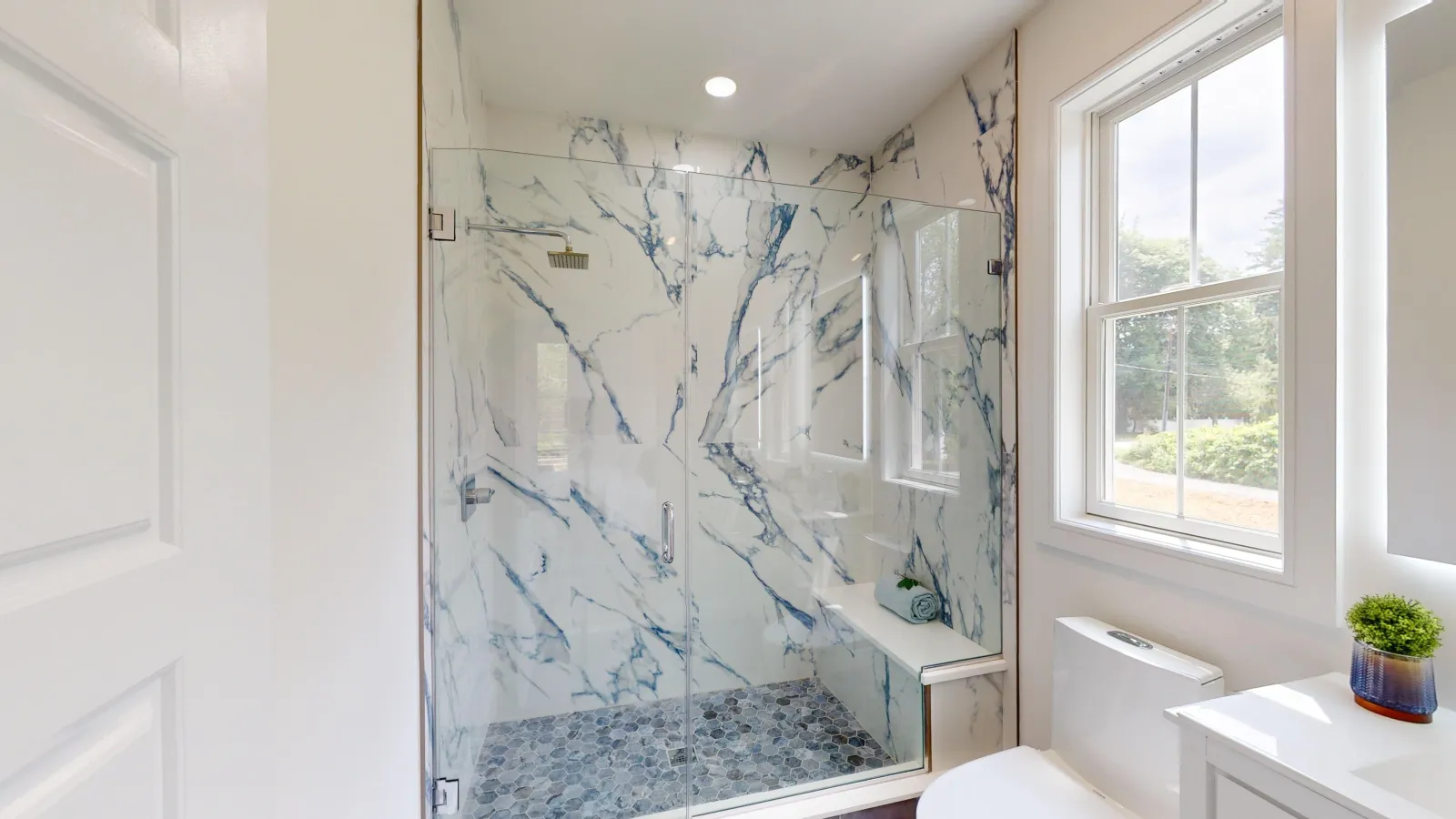
One of the first decisions in almost every bathroom remodel we build in Bergen County is whether to prioritize a walk-in shower, a soaking tub, or both. There is no single right answer. The best choice depends on how you use the room, how much space you have, and what you want the finished bathroom to say about your home.
The Case for a Walk-In Shower
A curbless walk-in shower is the most requested feature we install in Bergen County bathroom remodels, and for good reason. It is easier to get in and out of than a shower with a curb or a tub wall, which matters for households planning to stay in their home long-term. It also opens up a small bathroom visually, since a glass-enclosed walk-in shower reads as more open space than a tub-shower combination with a shower curtain or sliding door. Walk-in showers also give us more room to build in features homeowners actually use daily: a rain shower head, a handheld sprayer, built-in niches for shampoo and soap, and a bench for shaving or sitting.
The Case for a Soaking Tub
A soaking tub serves a different purpose. It is not about daily efficiency, it is about having a place to actually relax at the end of a long day, and for many homeowners that matters enough to make room for one. Freestanding soaking tubs have become the more popular choice over built-in tubs, since they read as a design feature rather than a fixture, and they work well as a focal point in a primary bathroom with the space to support one. If your household includes small children, a tub also remains the easiest way to bathe them, which is worth weighing even if the adults in the house would otherwise choose a shower-only layout.
What Each Costs in Bergen County
A walk-in shower remodel is usually less expensive than adding a freestanding soaking tub of comparable quality, mainly because a tub adds its own plumbing, structural, and fill-time considerations on top of the tile and glass work a shower already requires. That said, cost depends heavily on materials. A walk-in shower finished in large-format porcelain will cost less than one finished in natural stone with a custom niche and bench, and a basic drop-in soaking tub will cost far less than a freestanding stone or cast iron tub positioned as a design feature. We provide a fixed, itemized quote so you can compare the real cost difference for your specific bathroom rather than a rule of thumb.
Space and Layout Needs
Walk-in showers need less floor space than most homeowners expect, especially with a curbless, glass-enclosed design, which makes them the practical choice in smaller secondary bathrooms and powder rooms with limited footprint. Soaking tubs need more room, both for the tub itself and for the clearance around it to move comfortably. In a primary bathroom with enough square footage, we often build both: a walk-in shower for daily use and a soaking tub as a secondary feature. In a smaller bathroom, we typically recommend choosing one and doing it well rather than splitting the space between two undersized fixtures.
Resale Considerations
For resale, at least one full bathroom in the home with a tub is generally a safer choice, since some buyers specifically look for a tub, particularly families with young children. That does not mean every bathroom needs one. If your home has multiple full bathrooms, converting a secondary bathroom to a walk-in shower while keeping a tub elsewhere in the house is a common approach that satisfies both daily convenience and resale expectations.
Can You Have Both?
Yes, and in larger primary bathrooms it is one of the most requested layouts we build. A separate walk-in shower and freestanding soaking tub gives you the daily efficiency of a shower and the option of a soak when you want one, without either fixture competing for space. This layout does require enough square footage to keep both features from feeling cramped, which is why we assess the room's actual dimensions before recommending it.
How to Decide for Your Household
Start with how you actually use your current bathroom, not how you imagine using a new one. If a bath is a rare event in your household, a well-built walk-in shower will serve you better day to day than a tub you rarely fill. If relaxing in a tub is part of your routine, or you have young children, prioritize the tub and build the shower into a different bathroom if the space allows. Our team walks through this decision with every Bergen County homeowner during the design phase of a bathroom remodel, using the room's actual layout and your daily routine rather than a generic recommendation.
A Few Questions Worth Asking Yourself
Before finalizing a decision, walk through your current bathroom habits honestly. How many baths has anyone in the household taken in the last month? Do you shower quickly on your way out the door, or is a longer shower part of how you relax? Is this a bathroom guests will see and use, or a private space only you and your household will experience day to day? The answers usually point toward one option more clearly than a features list ever will.
It is also worth thinking about how long you plan to stay in the home. A curbless walk-in shower is generally considered more accessible over time, which matters for homeowners planning to age in place. A soaking tub, meanwhile, tends to hold its appeal as a design and lifestyle feature regardless of how long you own the home, since it reads as a deliberate upgrade rather than a purely functional one.
For a full breakdown of what a bathroom remodel costs in Bergen County, see our related guide on bathroom renovation costs.
Ready to plan your own shower, tub, or both? Get a Free Bathroom Remodel Estimate →
Build Better Live Happier